
About the Day
On the night of 20 January 1990 the Soviet Army entered Baku. Azerbaijan remembers that night as Black January.
Black January (Azerbaijani: Qara Yanvar, also Qanlı Yanvar — "Bloody January") refers to the tragic events of the night of 19–20 January 1990, when units of the Soviet Army entered Baku on the orders of the Union leadership. Civilians were killed, and the day became a symbol of mourning and of the national dignity of Azerbaijan.
Against the backdrop of the collapse of the USSR, the escalation of the Nagorno-Karabakh conflict and the rise of a popular movement for independence, a state of emergency was declared in Moscow. The troops entered the city, breaking through barricades; unarmed people — including those who simply happened to be in the streets — came under fire and beneath the treads of tanks.
According to official figures, about 147 people were killed and more than 800 were wounded. Today, 20 January is the Day of National Mourning in Azerbaijan. The victims are honoured as martyrs (şəhidlər), and every year red carnations are laid at their graves at the Alley of Martyrs (Şəhidlər Xiyabanı) in Baku.
The Cost of the Night
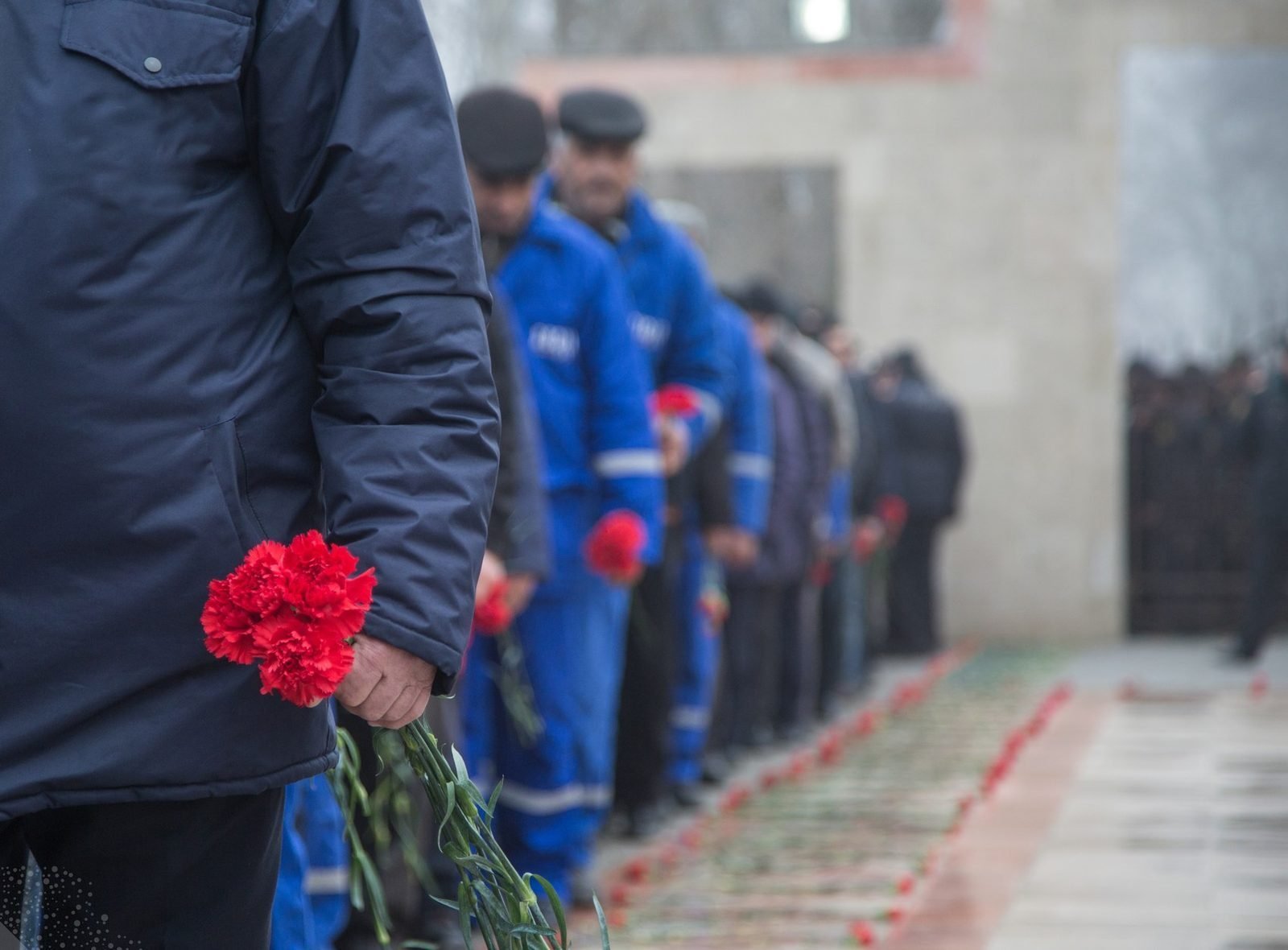
They came out unarmed — and remained in the memory of the nation forever.
The Alley of Martyrs · BakuThe Alley of Martyrs
Şəhidlər Xiyabanı
The dead were buried on 22 January on the heights above Baku Bay — where a park had once stood. This place became the Alley of Martyrs (Şəhidlər Xiyabanı), the main memorial to the victims of Black January and to national independence.
An eternal flame burns above the alley, and rows of black granite look out over the sea. People come here on 20 January and on other days of remembrance — the country's leaders, the people of Baku, visitors to the city — to lay red carnations and honour the memory of the fallen with a minute of silence.
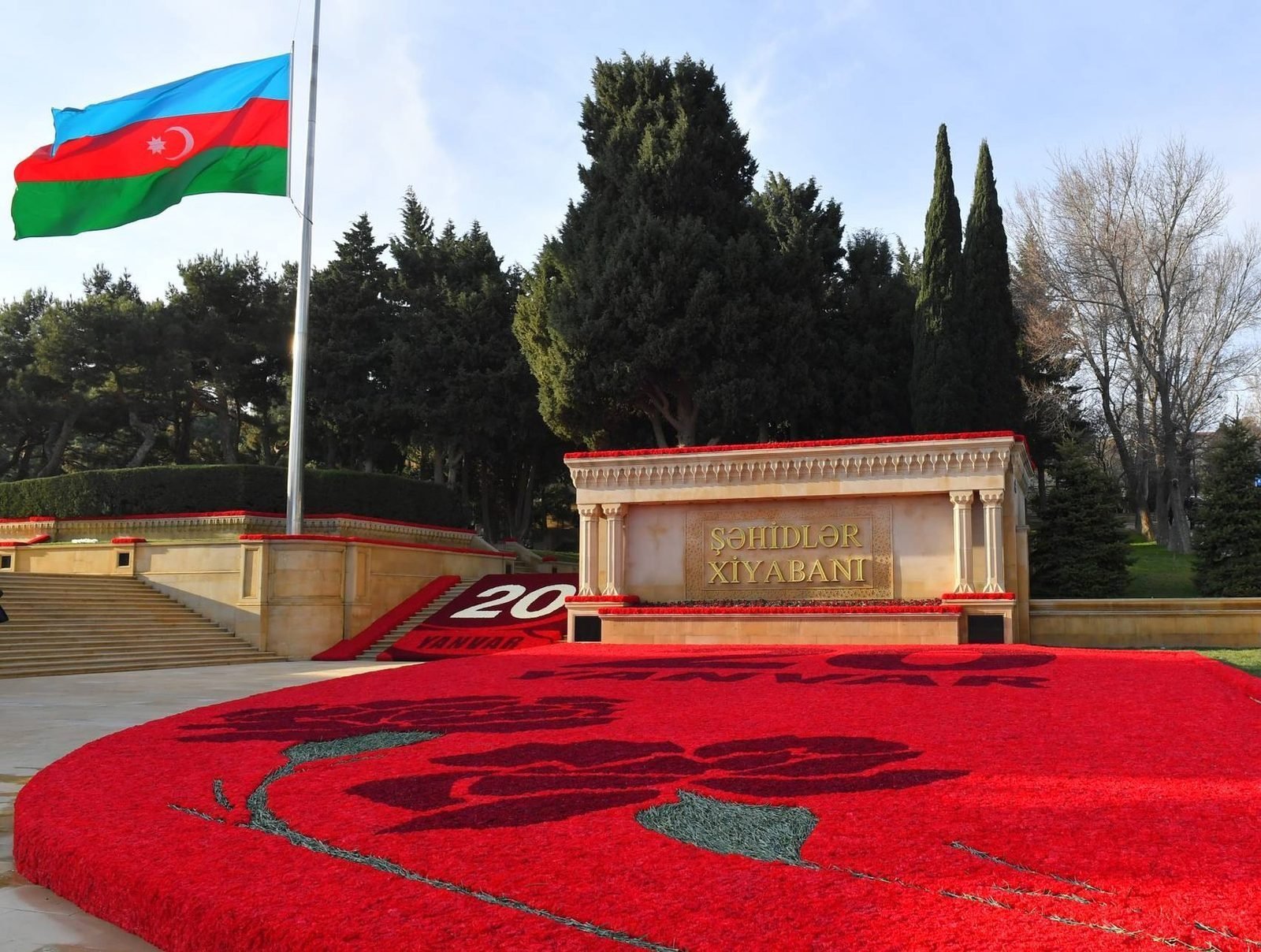 20 January
Sections